Capital appreciation — how property value compounds over time.
The long-term case for property rests on one idea: value that grows on itself, year after year. Here's what capital growth is, what actually drives it on the Lower North Shore, and how to estimate it for yourself.
What is capital growth?
An investment property earns its keep two ways — capital growth (the increase in the property's value) and rental yield (the income it produces). Capital growth is simply the percentage increase in the price of an asset over time; in this case, a home. It's the quiet part of the return: it doesn't show up in the bank account each month, but over a long hold it's usually where the real wealth is built.
The two returns pull in different directions, and understanding the trade-off is the whole game. A property can carry a strong rental yield and modest growth, or a softer yield and stronger growth. On the Lower North Shore, the long-run story has been weighted heavily toward capital growth — which is exactly why it rewards patience.
Two ways a property pays
| Capital growth | Rise in the property's value over time |
| Rental yield | Income the property produces |
For a genuine buy-and-hold strategy, a history of stable growth in the 5–10% range is what you're looking for — steady compounding beats a single big year.
What actually drives it.
Capital growth comes down to simple demand and supply: how many people want to live in an area, against how many homes are available. Everything below feeds one side of that equation or the other.
Demand and supply.
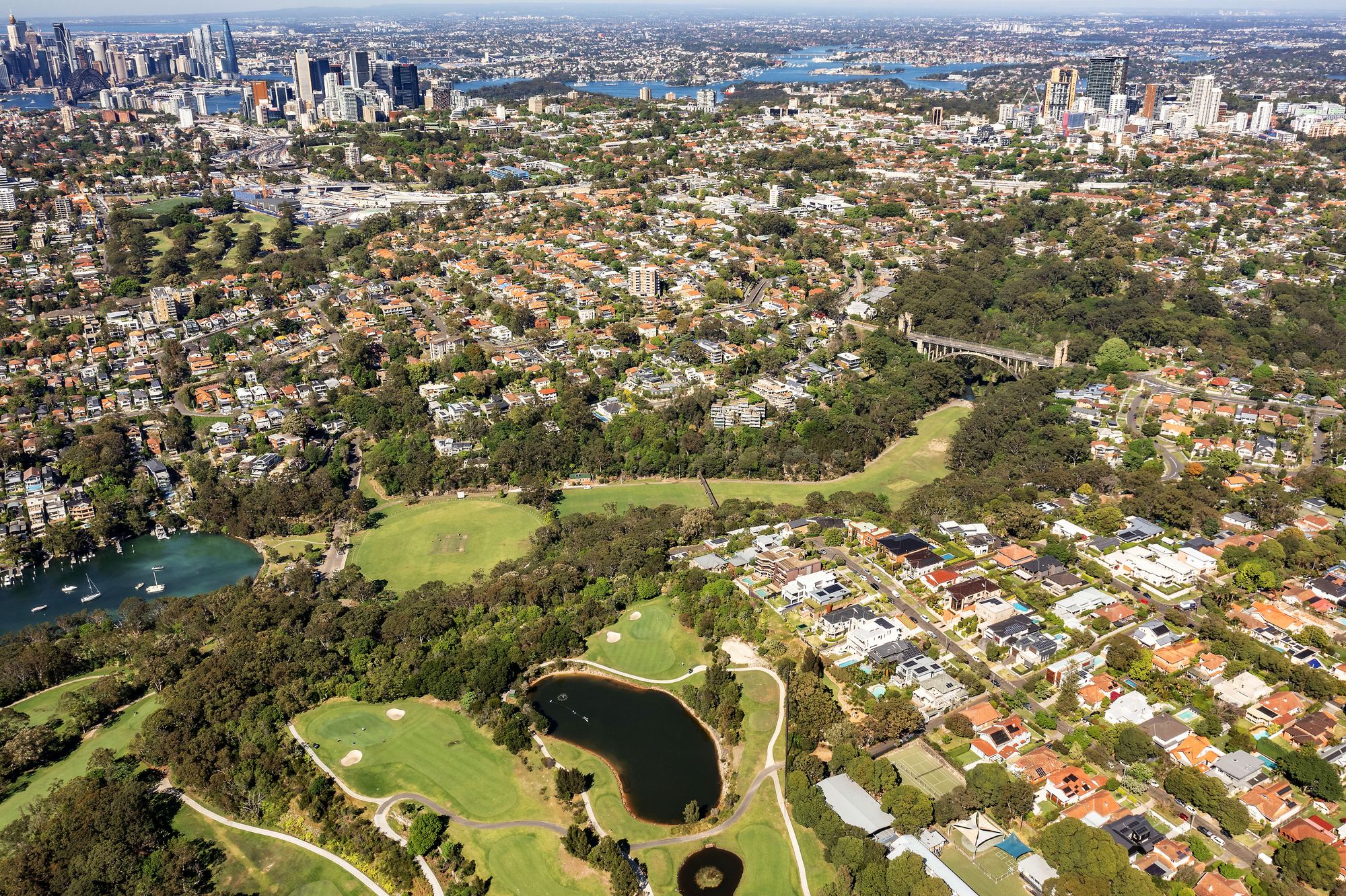
Growth is driven by demand — the number of people wanting to live in the area — set against supply, the volume of houses available. Where demand consistently outruns a limited supply of homes, prices are pushed up over time. The Lower North Shore's constrained supply is a big part of its long-run story.
Location and demographics.
Look at the characteristics of the location and how the demographics are shifting — average income, median age, and the split of owner-occupiers versus investors. Rising incomes and a strong owner-occupier base tend to support sustained growth.
Established capital benchmark.
Check whether there's nearby precedent for higher house values — what's sometimes called an established capital benchmark. When a neighbouring street or suburb has already proven buyers will pay more, it sets a ceiling that a rising area can grow into.
Read the trend, not the noise.
These influences differ from one suburb to the next — and sometimes from street to street. When you compare a suburb's past performance, don't lean on quarterly growth rates: those figures swing hard when a handful of big sales skew the data. Judge the trend over years, not quarters.
Project your capital growth
See how a property compounds over time. Set the value, an assumed growth rate and a term, and the projection updates instantly — with a year-by-year table out to 30 years so you can compare horizons.
Adjust the highlighted cells. Everything else calculates automatically.
Your Investment
Projected Return
Year-by-Year Projection
| Year | Opening value | Growth in year | Closing value |
|---|
Highlighted row = your selected term. The table projects to 30 years so you can compare horizons.
Estimate only, based on your assumed growth rate. Past growth does not guarantee future returns. Not financial advice. Prepared by Team Howe — Raine & Horne Lower North Shore.
Want the honest number on a property's growth potential?
Capital growth starts with buying — or holding — the right asset in the right street. That's exactly what the PSM method is built to read.
Book an AppraisalSpeak to a team member.
Would you like to speak to a team member? Fill in your details below and we'll get back to you shortly.