|
|||||||||
|
David’s Take · Weekly Letter
Auctions Do Not Create Demand.
|
|||||||||
|
Lower North Shore Market Reports — Download Free
|
|||||||||
|
Dear all, |
|||||||||
| Some agents still talk about auctions as if they have magic. | |||||||||
| Actually, it’s not. | |||||||||
| Auctions are a stress test. | |||||||||
| If a house is accurately positioned, buyers will compete. If it is priced too high, poorly displayed, or has drawbacks that the market cannot ignore, auctions quickly expose these issues. | |||||||||
| Every seller loves the feeling of “selling before the auction.” | |||||||||
| It feels very strong. Very clean. It also makes people feel that the market has already given its answer. | |||||||||
| But the real issue isn’t whether the house was sold before the auction. | |||||||||
| The real question is: | |||||||||
| Why do buyers feel a strong sense of urgency before the auction and are willing to act early? | |||||||||
| This is not a small difference. | |||||||||
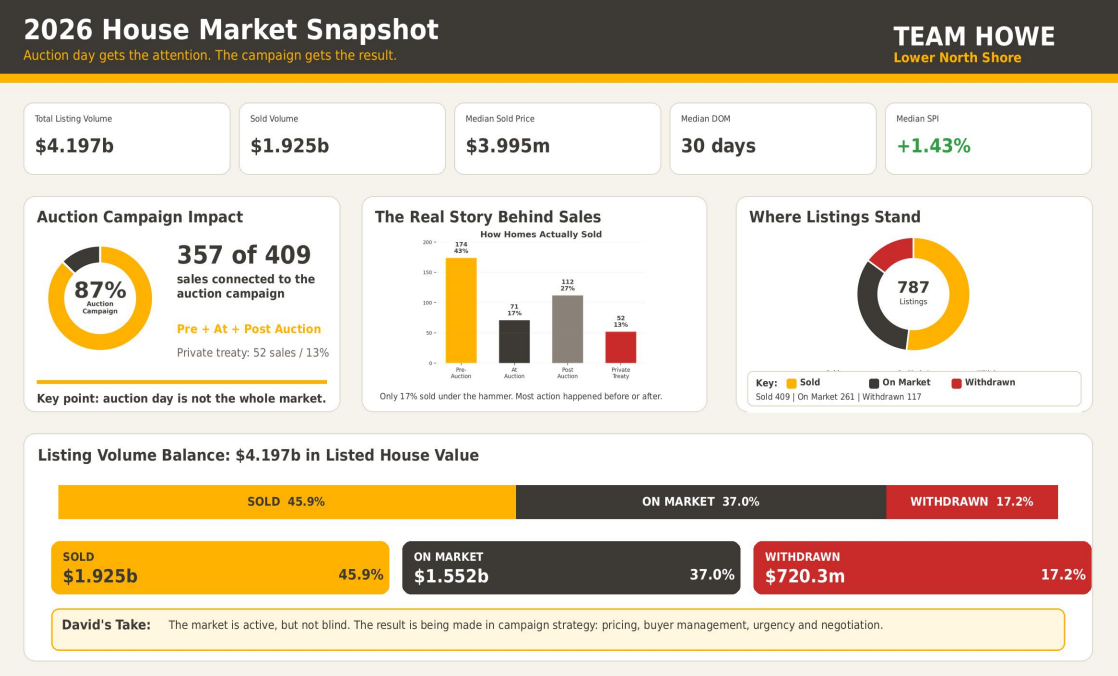
| Moreover, 43% is not a small proportion. It clearly tells us one thing: Some houses can create confidence and a sense of urgency. Some houses only create hesitation. And in today’s market, hesitation is fatal. | |||||||||
|
|||||||||
Misconception: Selling before auction is equivalent to selling cheap |
|||||||||
| Selling before the auction does not automatically mean a discounted sale. | |||||||||
| It usually indicates that there is a buyer with strong enough motivation to act before competition becomes public. This is not a weakness. This is market validation. | |||||||||
| Conversely, if a house fails to be auctioned, the message it sends to the market is completely different. It makes buyers feel that the price guidance may be problematic, market urgency is lacking, and the upcoming sales phase is already starting over with a label of public failure. | |||||||||
| In the 2026 housing sales statistics, there will be a total of 409 transactions, of which 357 are related to the auction process—including pre-auction sales, auction day, or post-auction sales. That’s 87%. | |||||||||
| This is the most crucial insight. Auction day is not the whole market. The entire sales cycle is the real market. | |||||||||
Why are some houses sold before the auction? |
|||||||||
| Generally speaking, houses that can be sold before auction often have the following five advantages. | |||||||||
|
|||||||||
Why do some houses go unbid when auctioned? |
|||||||||
| Houses that struggle to perform usually have one or more of the following problems. | |||||||||
|
|||||||||
Market Review |
|||||||||
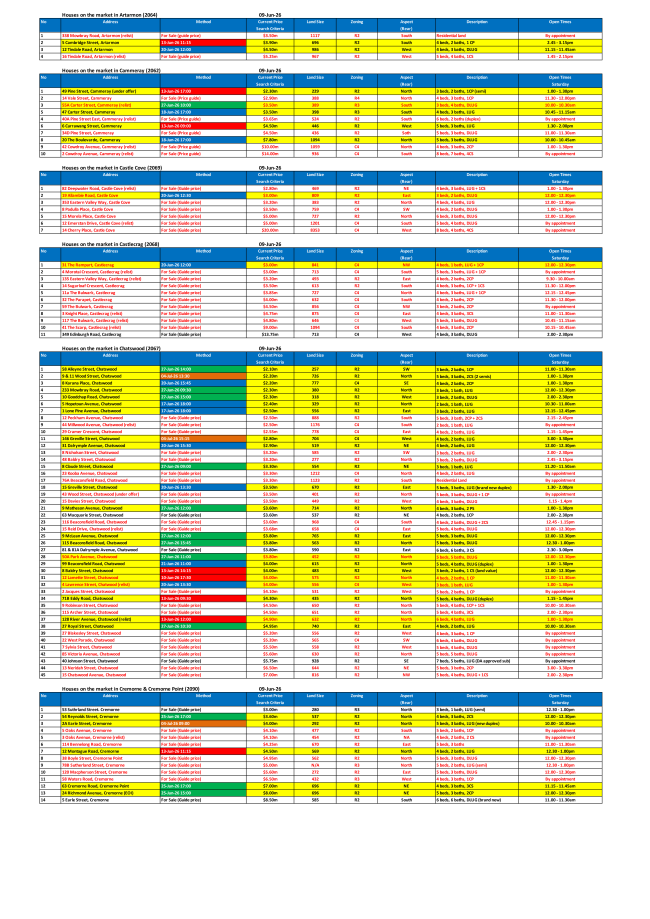
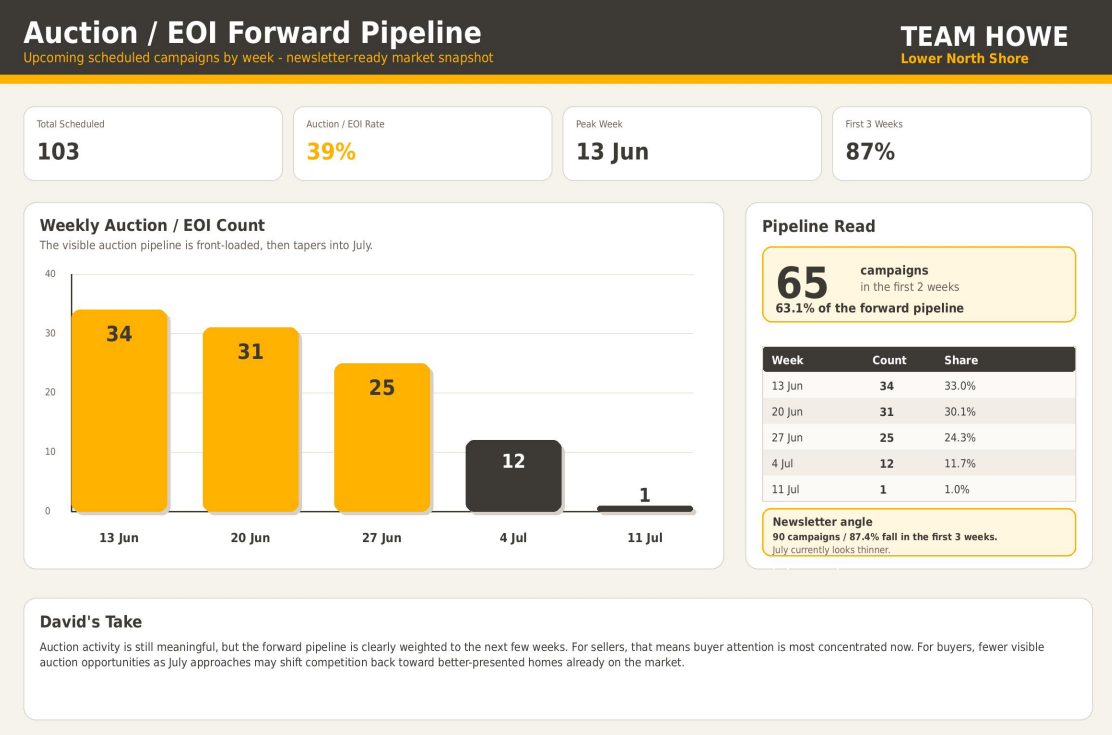
| The past six weeks show that the market is still running, but buyers have become more selective. | |||||||||
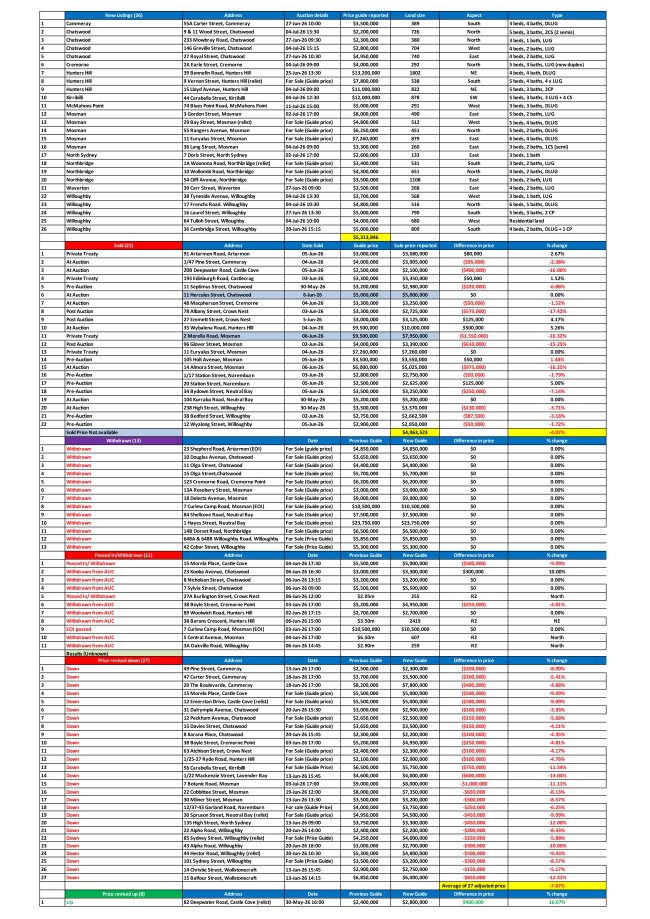
| The number of new listings has clearly fallen from the peak in early May, while transaction activity has been more stable than expected. There were 26 new listings this week, down from 32 last week and far below the 54 listings recorded on May 4. Currently, the total number of listings stands at 261, slightly below last week’s 270. | |||||||||
| This indicates that inventory is not accumulating endlessly, but is being sold, withdrawn, or readjusted. | |||||||||
| Transactions improved this week, with 22 new deals, up from 16 last week. This is a good sign. The market has not frozen. When the price, the house itself, and timing align, buyers are still making deals. | |||||||||
| Compared to last year, auction market conditions remain relatively soft. Sydney’s Domain auction yielded about 52%, compared to about 66% in the same period last year. REA’s auction liquidation rate is currently around 42%, down from 46% six weeks ago. | |||||||||
| This is not a panic market, but it is definitely not a hot auction market. | |||||||||
| A total of 27 homes saw price drops this week, up from 21 last week and significantly higher than the quieter weeks, such as 9 home drops on May 25. The number of withdrawals also rose to 13 units, the highest level during the six-week observation period. This tells us that some sellers are still using yesterday’s prices to face today’s market. | |||||||||
|
|||||||||
|
|||||||||
|
Explore The Area
Northbridge Interactive Map
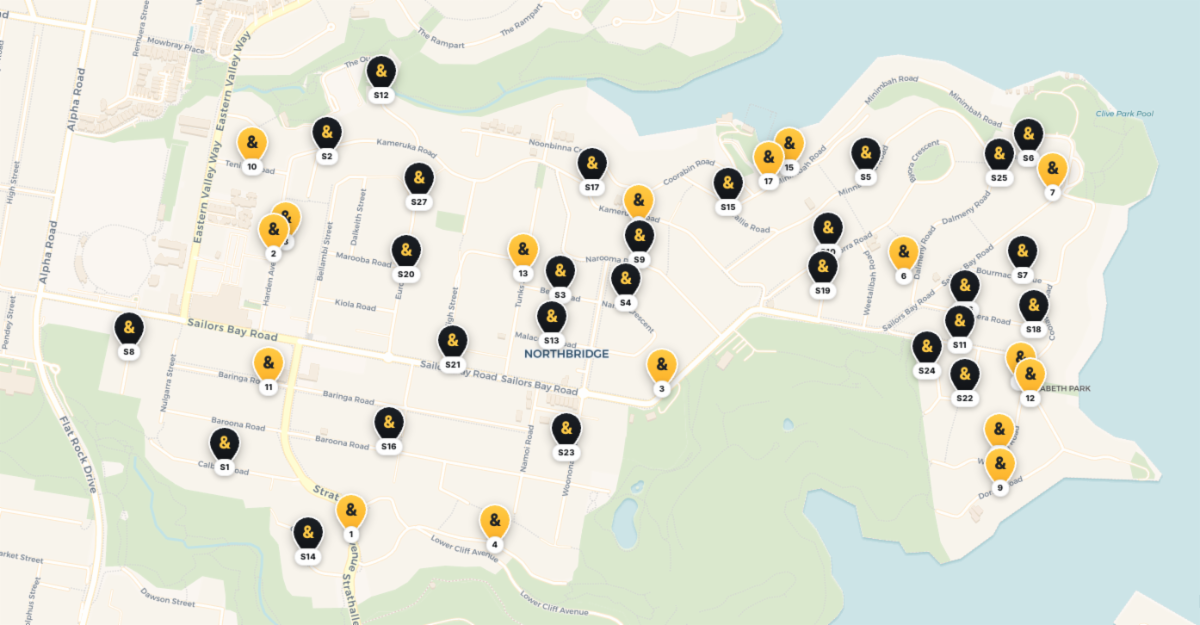
→ Click to Explore the Interactive Map
|
|||||||||
|
|||||||||

Lower North Shore
140 Sailors Bay Road, Northbridge NSW 2063
Compiled by Team Howe. Statistics drawn from Domain, REA, and our own active LNS listing and sales data as at 9 June 2026. Figures are provided in good faith and may have changed since publication. Interested parties should make their own independent enquiries before relying on any information herein.
© Raine & Horne Lower North Shore. You are receiving this because you have previously been in touch with our office about Lower North Shore property. |
|||||||||