| |

|
Team Howe Weekly
2 November 2026
|
|
|
|
| |
|
Lower North Shore · The Auction Series
The Vendor Bid
What it really tells the market.
|
| |
|
Dear Readers,
|
| Before the final chapter of our auction series, a timely heads-up: NSW’s new underquoting rules are expected to take effect on 17 November. |
| Once they do, residential properties advertised for sale—including auctions—will need to carry a price guide. Where a range is used, the upper figure can generally be no more than 10% above the lower. |
| I will explain what this means for buyers and sellers next week. |
| For now, back to the auction room, where few words create more confusion than: |
| “Vendor bid.” |
| Some buyers assume another buyer has entered the competition. Others think it is a disguised bid. |
| It is neither. |
| A vendor bid is made openly by the auctioneer on behalf of the seller. It is not genuine buyer demand, and it does not mean the property is about to sell. |
| It sends one clear message: |
| “The seller is not prepared to sell at the current level.” |
What a Vendor Bid Actually Is |
| In NSW, the auctioneer may make only one vendor bid on behalf of the seller. |
| Before bidding begins, the auctioneer must announce that this right exists. When making the bid, they must identify it clearly as a vendor bid. |
| It cannot be disguised as a bid from a buyer. Dummy bidding is illegal. |
| A vendor bid is normally used while bidding remains below the reserve—the minimum price at which the seller has authorised the property to be sold. |
| It does not disclose the reserve. It simply tells the room that the current bidding is not yet acceptable to the seller. |
Why It Is Used |
| Auctions do not always begin neatly. |
| A buyer may open at an unrealistically low figure. Genuine bidders may wait for someone else to move first. Bidding may stall before the auction has properly developed. |
| A vendor bid can move the auction away from an unrealistic opening, indicate the level the seller wants buyers to consider and encourage genuine bidders to re-enter. |
| Used properly, it can give a stalled auction direction. |
| But it cannot create competition where none exists. |
| “A vendor bid can move the auction. It cannot move the market.” |
What Buyers Should Read Into It |
| A vendor bid is not another buyer competing against you. It is the seller publicly stating that the current bid is insufficient. |
| Buyers should not panic or assume they are about to lose the property. They should return to the evidence: |
| What do comparable sales support? |
|
| Are genuine buyers still bidding? |
|
| Is the next bid within their approved limit? |
|
| What is the property genuinely worth to them? |
|
|
|
| The vendor bid may provide direction, but it should not change what an informed buyer believes the property is worth. |
What the Seller Should Hear |
| The seller must read the vendor bid just as carefully. |
| If genuine bidding resumes, the auction may simply have needed a push. |
| If nobody responds, that silence is evidence. Buyers may have reached their limit, the reserve may be sitting above the market, or there may never have been enough genuine competition to support the expected price. |
| The auctioneer can invite another bid. They cannot force buyers to accept a value they do not believe in. |
When the Gap Becomes Clear |
| Imagine genuine bidding stops at $3.7 million. |
| The auctioneer places a vendor bid at $3.8 million, but the reserve is $4.0 million. |
| If no buyer responds, the problem is no longer auction technique. The buyers present have not supported the gap between $3.8 million and $4.0 million. |
| That does not automatically mean accepting the last genuine bid. It means the seller and agent must recognise the evidence and decide whether to: |
| reduce the reserve and invite further competition |
|
| pass the property in and negotiate immediately |
|
| hold the position and accept that it may not sell |
|
|
|
| What matters is making that decision consciously—not pretending the gap does not exist. |
A Signal, Not a Valuation |
| A vendor bid does not prove that the property is worth that amount. |
| Only genuine buyer behaviour can do that. |
| One buyer bidding above it is evidence. Several buyers competing beyond it is stronger evidence. Silence is evidence too—just not the kind sellers enjoy hearing. |
| This is why auction results must be read carefully. The highest figure called by the auctioneer may be a vendor bid rather than genuine buyer bidding. |
| The important number is the highest genuine bid—and what happened immediately afterwards. |
David’s Take
A vendor bid is a legitimate and useful auction tool when it is transparent, properly timed and connected to a realistic strategy.
But it is still only a tool.
It can restart bidding, show buyers where the seller stands and help the auctioneer search for the next genuine bid.
What it cannot do is turn an unsupported expectation into market value.
If buyers respond, the auction moves forward. If they do not, the seller has received an answer—and the quality of the advice that follows matters more than the vendor bid itself.
“A vendor bid tells buyers what the seller wants. The next genuine bid tells the seller what the market will support.”
|
|
| If you are considering selling by auction and want a strategy for every possible outcome—not merely a plan for the hammer to fall—reply to this email or call me. |
| Next week: The End of “Contact Agent”—What NSW’s New Price-Guide Rules Mean for Sellers and Buyers. |
| Vague wording such as “Contact Agent” is expected to be on its way out. I will explain what the new rules require, why they exist and what they change for anyone buying or selling on the Lower North Shore. |
| Sources: NSW Fair Trading — underquoting crackdown · Edutive: NSW underquoting reforms — when they start · Elyment: new price-guide statement |
Lower North Shore (Past 10 Months Data) |
Lower North Shore · Weekly Market Outlook
Where the market is heading
A plain-language summary of the key trends across 20 Lower North Shore suburbs, based on settled house sales from 1 January to 31 October 2026. Updated weekly.
|
|
|
Prices
$3.83m
▼ 2.4% on 2025
|
|
|
Sales pace
~881
▼ 23.9% on 2025’s 1,157
|
|
|
Time to sell
30 days
▲ 11.1% vs 27 days in 2025
|
|
|
|
What this means for you
|
If you’re selling
| Homes are taking longer to sell — the region median is 30 days, up from 27 last year — so allow a longer time line and price to the current market, not last year’s. | | Buyers are negotiating: this week 28 listings cut their asking price against 7 increases. | | Auction remains a strong option — 105 auctions or EOI campaigns are booked across the coming weeks, 40% of current listings. |
|
|
If you’re buying
| The region median has eased 2.4% to $3.83m, and there is more choice: 1,182 new listings so far this year. | | Fewer competing buyers — sales are tracking about 24% below last year, so well-priced homes are still selling but with less pressure. | | 12 of the 17 reliably measured suburbs have a lower median than 2025 — see the movers below. |
|
|
| |
|
|
Median price risers
| Neutral Bay | ▲ 13.5% | | McMahons Point | ▲ 5.8% | | Naremburn | ▲ 4.3% | | North Sydney | ▲ 3.7% |
|
|
|
Median price fallers
| Castlecrag | ▼ 16.6% | | Crows Nest | ▼ 13.4% | | Hunters Hill | ▼ 13.0% | | Mosman | ▼ 12.8% | | Middle Cove | ▼ 12.6% |
|
|
|
|
Taking longer to sell
| Castlecrag | 29 → 56 days | | Middle Cove | 25 → 43 days | | Naremburn | 15 → 27 days |
|
|
|
Selling faster
| Northbridge | 62 → 42 days | | Willoughby | 32 → 30 days |
|
|
|
|
The week just gone
Week ending 1 Nov 2026
|
17 new listings | 27 new sales | $5.15m average sale price | 48% Sydney auction clearance (Domain) |
|
| |
|
|
How the 734 homes sold in 2026
Most auction homes are negotiated before or after the day. The hammer is the rarest outcome.
|
| Sold BEFORE auction |
|
| | 502 negotiated before
or after auction day |
|
| Sold AFTER auction |
|
| Under the hammer |
|
|
| Private treaty |
|
|
618 homes (84%) sold through an auction campaign — but only 116 (16%) under the hammer. Of auction-campaign sales, 81% were negotiated before or after the day.
An auction is a process, not a single moment.
|
734 house sales, Lower North Shore 2026 year to date · total volume $3.38b · median $3.825m · median 30 days on market · Team Howe, Raine & Horne Lower North Shore |
|
|
Weekly Scorecard
Week ending 1 Nov vs 25 Oct 2026 · Team Howe, Lower North Shore
|
| |
1 Nov |
25 Oct |
Change |
| Listings |
| New listings |
17 |
27 |
▼ -37% |
| Average listing price (new) |
$5.77m |
$5.86m |
▼ -1.5% |
| Total listings this week |
263 |
281 |
▼ -6.4% |
| Total withdrawn listings |
185 |
180 |
▲ +2.8% |
| Median listing price |
$4.00m |
$3.95m |
▲ +1.3% |
| Median days on market (listings) |
60 days |
53 days |
▲ +13.2% |
| |
| Sales |
| New sales |
27 |
10 |
▲ +170% |
| Average sale price (this week) |
$5.15m |
$5.99m |
▼ -14% |
| Median days on market (sales this week) |
48 days |
40 days |
▲ +20% |
| Sale price index (vs guide) |
-6.2% |
-7.94% |
▲ +1.74 pts |
| Median sale price (2026 to date) |
$3.83m |
$3.83m |
▼ -0.1% |
| |
| Activity |
| Auctions booked |
105 |
115 |
▼ -8.7% |
| Auction share of listings |
40% |
41% |
▼ -1 pt |
| Passed in |
6 |
10 |
▼ -40% |
| Withdrawn this week |
9 |
5 |
▲ +80% |
| Price adjusted down |
28 |
21 |
▲ +33.3% |
| Price adjusted up |
7 |
2 |
▲ +250% |
| Auction date changed |
11 |
12 |
▼ -8.3% |
| |
| Wider Sydney |
| Domain Sydney auction result |
48% |
45% |
▲ +3 pts |
| Domain Sydney median |
$1.49m |
$1.65m |
▼ -9.7% |
| REA NSW clearance |
39% |
34% |
▲ +5 pts |
| |
|
|
Arrows show direction only, not good or bad. Amber up, charcoal down.
“pts” = percentage-point move.
|
|
|
Lower North Shore houses: sales rose as stock tightened, but price cuts increased
|
|
What moved
| New sales rose from 10 to 27, up 170%, while new listings fell from 27 to 17, down 37%. | | Average sale price fell from $5,988,000 to $5,148,000, down 14%. However, the sale price index improved from 7.94% below guide to 6.2% below guide—a 1.74 percentage point lift. | | Price reductions increased from 21 to 28, up 33.3%, despite total listings falling from 281 to 263, down 6.4%. | | Auctions booked eased from 115 to 105; passed-in properties fell from 10 to 6. |
What it suggests
| More sales alongside fewer new listings points to tighter available stock. Listings remain concentrated in Mosman (74) and Chatswood (44). | | More price cuts suggest sellers are adjusting expectations, while sales closer to guide suggest better alignment with buyers. The lower average sale price could reflect the mix of homes sold rather than a broad fall in values. |
Watch next week
| Watch whether stronger sales and fewer new listings persist, and whether price cuts continue alongside sales closer to guide. |
|
| |
|
|
Listings by suburb
Houses currently on the market — 263 across 20 Lower North Shore suburbs.
|
| Mosman | | 74 | | Chatswood | | 44 | | Hunters Hill | | 20 | | Willoughby | | 20 | | Castle Cove | | 16 | | Castlecrag | | 15 | | Northbridge | | 15 | | Cremorne | | 12 | | Cammeray | | 8 | | Crows Nest | | 8 |
|
|
| Neutral Bay | | 7 | | North Sydney | | 6 | | McMahons Point | | 4 | | Middle Cove | | 4 | | Artarmon | | 3 | | Lavender Bay | | 2 | | Naremburn | | 2 | | Wollstonecraft | | 2 | | Kirribilli | | 1 | | Waverton | | 0 |
|
|
| |
|
In Summary |
| How the market is trending |
| Activity has slowed. The Lower North Shore recorded 734 house sales to 31 October. At the current pace, 2026 will finish at approximately 881 sales—around 24% below the 1,157 sales recorded in 2025 (i.e. down by a quarter in sales) and below the quieter years of 2022 and 2023. Year-to-date sales value stands at $3.24 billion. |
| Prices remain comparatively resilient. The aggregate median of $3.83 million is approximately 2% below last year’s $3.92 million. Part of that decline appears to be a change in the mix of properties sold: fewer transactions in premium suburbs can pull down the regional median even when individual suburb values remain relatively stable. |
| Selling is taking longer. Median days on market has stretched to 30—the longest of the past six years and up from 22 days in 2021. This is the clearest sign of the change: buyers have more time to compare, and vendors are working harder for every sale. |
| The pipeline remains active. Of the 263 houses currently for sale, around 40% are scheduled for auction across the next six auction dates. Selling intent remains strong, although the spring pipeline is less consistent than last year. |
| The Lower North Shore has shifted from a fast seller’s market to a slower, more balanced environment. Price movements remain modest and selective; the real adjustment is showing up in fewer transactions and longer campaigns. |
|
“The market has not fallen away. It has slowed down—and time is now doing more damage than price.”
|
|
| |
| |
|
New · Team Howe Website
Our new website is now live.
Read every edition of the Team Howe Weekly Newsletter, explore current market insights and find out more about who we are and how we work.
→ Visit Team Howe Website
|
|
| |
| |
|
Explore The Area
Northbridge Interactive Map
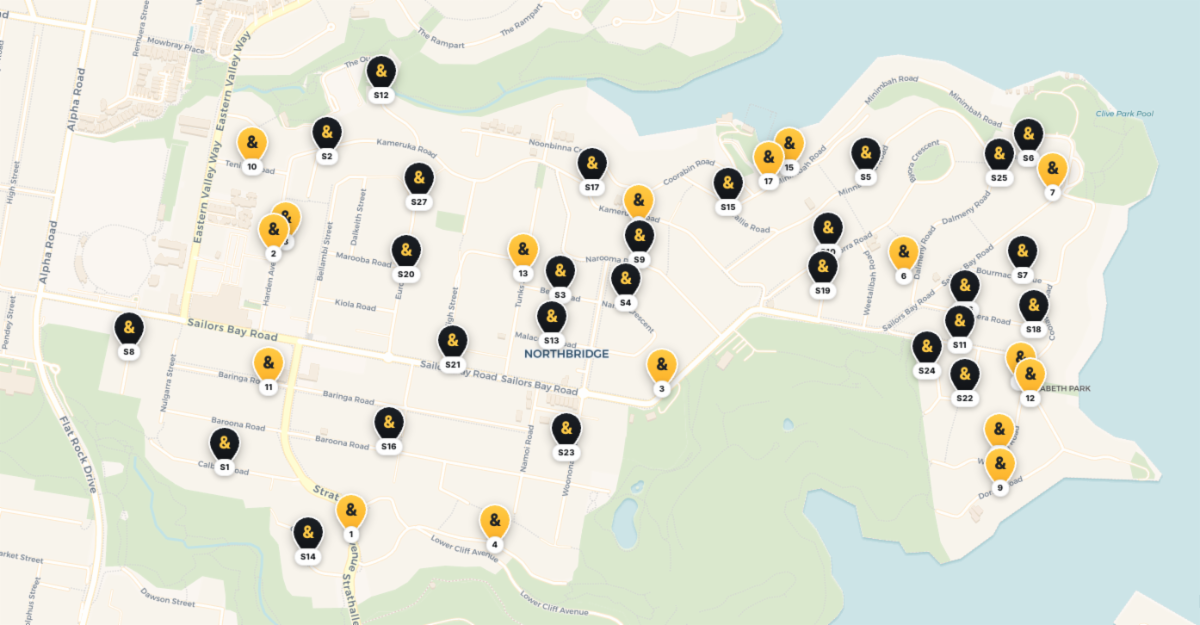 → Click to Explore the Interactive Map |
| |
|
|
|
David Howe
Partner Agent · Raine & Horne Lower North Shore
|
Taka Shino
Team Howe · Raine & Horne Lower North Shore
|
|
|
Lower North Shore
140 Sailors Bay Road, Northbridge NSW 2063
Real Insight Weekly
© Raine & Horne Lower North Shore. You are receiving this because you have previously been in touch with our office about Lower North Shore property.
|
| |