| |

|
Team Howe Weekly
19 October 2026
|
|
|
|
| |
|
Lower North Shore · The Auction Series
Setting the Reserve
The minimum price — and why
getting it right matters.
|
| |
|
Dear Readers,
|
| Last week, we discussed why a property being passed in does not necessarily mean the auction has failed. This week, we look at the number at the centre of that moment: the reserve. |
| The reserve is the minimum price the seller has authorised the auctioneer to accept on auction day. It is not necessarily the price the seller hopes to achieve. They are two very different numbers. |
A Floor, Not a Target |
| Every seller naturally has a price they would love to achieve. The reserve serves a different purpose. It defines the price below which the property cannot be sold under the hammer without the seller’s further approval. |
| That does not mean setting it cheaply or giving the home away. It means protecting the seller from an unacceptable result without preventing genuine buyers from competing. |
| “The reserve is not the price you want. It is the price below which you would rather keep the property.” |
| When the hoped-for price becomes the reserve, bidding may stop below a number no buyer was ever prepared to support. The seller has protected their expectation — but not their result. |
Control Is Not the Same as Competition |
| Before the reserve is reached, the seller remains in control: the property cannot be sold under the hammer. Once bidding reaches the reserve, the auctioneer can declare the property on the market, and the home will be sold to the highest bidder. |
| Buyers now know that every bid counts — and that certainty can encourage them to compete. A realistic reserve can help that competition begin. An overly ambitious reserve may prevent the property from ever reaching that point. |
| “Control can prevent a sale. Competition is what drives the price.” |
Set It From the Campaign — Not the Appraisal |
| The reserve should not be fixed during the original appraisal, weeks before buyers have inspected the property. Nor should it be invented under pressure on auction morning. |
| A likely figure should be discussed beforehand. The final reserve should then reflect the evidence collected during the campaign: |
| buyer enquiry and inspection numbers |
|
|
| contract and building-report requests |
|
|
|
| comparable properties sold during the campaign |
|
| the number and readiness of registered bidders |
|
| the seller’s personal circumstances |
|
|
|
| In NSW, the reserve must be given to the auctioneer in writing before bidding begins. The agent and seller should therefore review the evidence before auction day, agree on the reasoning, and arrive prepared — not begin the discussion while buyers are waiting outside. |
The Price Guide and Reserve Should Make Sense Together |
| The price guide is the figure or range communicated to buyers during the campaign. It attracts buyers to the property. The reserve determines when the property can be sold under the hammer. |
| They do not need to be identical, but they should tell a consistent story. If the reserve sits well above the guide, the campaign may have attracted buyers who were never capable of purchasing the property. |
| The guide should remain reasonable, reflect the available evidence, and be updated when buyer feedback or market conditions change. A well-managed campaign should produce a price guide, seller expectation and reserve that make sense together. |
What Our Numbers Show |
|
The hammer is the rare outcome
How auction-campaign homes actually sell. More than four in five are negotiated before or after auction day.
|
| Sold BEFORE auction |
|
| | 81% negotiated
before or after |
|
| Sold AFTER auction |
|
| Sold UNDER the hammer |
|
|
Only 19% of auction-campaign homes sell on the day itself. The reserve is far more often the number you negotiate to — not the number the hammer hits.
|
588 auction-campaign sales, Lower North Shore, 2026 year to date · 276 pre-auction, 201 post-auction, 111 under the hammer · Team Howe, Raine & Horne Lower North Shore |
|
| Of the 588 Lower North Shore homes sold through an auction campaign this year: |
| 276 sold before auction (47%) |
|
| 201 sold after auction (34%) |
|
| 111 sold under the hammer (19%) |
|
|
|
| More than four in five were negotiated either before or after auction day (81%). |
| “It goes to show that an auction is a process — not simply one event.” |
| If the property passes in, the highest bid becomes the starting point for the negotiation that follows. The seller must then decide whether holding the reserve protects their position or risks losing the strongest buyer. |
The Seller’s Circumstances Also Matter |
| The reserve cannot be set by a formula alone. A seller who has already purchased another home, faces a firm deadline or needs to move may make a different decision from someone prepared to retain or lease the property. Neither position is automatically wrong. |
| What matters is that these circumstances are discussed openly before auction day. The reserve should reflect both the market evidence and what the seller is genuinely prepared to do if it is not reached. |
|
David’s Take
A good reserve does not cap the price. Buyers can continue bidding well beyond it. The reserve simply establishes the point at which the seller is prepared to let the competition determine the final result.
Set it too low without proper evidence and the seller may be unnecessarily exposed. Set it too high and genuine competition may never begin.
“A reserve should protect the seller from a poor result — not protect an unrealistic expectation from the market.”
Set it from the buyers who inspected, the evidence they produced and your genuine circumstances — not the number discussed at the kitchen table weeks earlier.
|
|
| If you are considering selling by auction and want a price guide and reserve strategy built on evidence, reply to this email or call me. |
| Next week: “On the Market” — The Three Words That Change the Auction. Why the timing of that announcement can encourage competition, or stop it before it begins. |
|
Weekly Market Scorecard
This week (17 Oct) vs last week (10 Oct). Change = direction and movement; percentage-point moves shown as “pts”.
|
| Metric |
17 Oct |
10 Oct |
Change |
| New listings |
44 |
33 |
▲ +33% |
| Avg listing price (this wk) |
$5,134,000 |
$4,677,000 |
▲ +10% |
| Listings on market |
267 |
251 |
▲ +6% |
| New sales |
20 |
8 |
▲ +150% |
| Avg sale price (this wk) |
$4,778,000 |
$2,620,000 |
▲ +82% |
| Median DOM (sales this wk) |
46 |
29 |
▲ +59% |
| Sale Price Index (SPI) |
-7.11% |
-11.98% |
▲ +4.9 pts |
| Withdrawn listings (total) |
177 |
175 |
▲ +1% |
| Median listing price (all) |
$3,950,000 |
$3,950,000 |
— 0% |
| Median DOM (all listings) |
51 |
56 |
▼ -9% |
| Total new listings 2026 |
1,142 |
1,104 |
▲ +3% |
| Total sales 2026 |
698 |
678 |
▲ +3% |
| Median sale price (all sales) |
$3,850,000 |
$3,840,000 |
▲ +0.3% |
| Median DOM (all sales) |
30 |
30 |
— 0% |
| Auctions this weekend |
101 (38%) |
83 (33%) |
▲ +22% |
| Withdrawn this week |
9 |
2 |
▲ +350% |
| Passed in |
12 |
13 |
▼ -8% |
| Price adjusted down |
21 |
13 |
▲ +62% |
| Price adjusted up |
8 |
3 |
▲ +167% |
| Auction date changed |
9 |
8 |
▲ +13% |
| Sydney clearance 2026 (Domain) |
52% |
46% |
▲ +6 pts |
| Sydney clearance last yr (Domain) |
70% |
69% |
▲ +1 pt |
| Sydney median (Domain) |
$1,430,000 |
$1,390,000 |
▲ +3% |
| Sydney total sales (Domain) |
$289.2m |
$226.0m |
▲ +28% |
| NSW clearance (REA) |
42% |
37% |
▲ +5 pts |
| Auctions scheduled (Sydney) |
914 |
921 |
▼ -1% |
|
|
▲ higher than last week ▼ lower — unchanged · “pts” = percentage-point move · Team Howe, Raine & Horne Lower North Shore
Note: weekly averages (sale/listing price) swing on small samples — 20 sales this week — and are skewed by high-end sales; read medians for the underlying trend.
|
|
|
2026 year to date by suburb
Change columns compare 2026 YTD with full-year 2025. Suburbs with only a handful of sales are statistically noisy.
|
| Suburb | Sales | Median | vs 2025 | DOM | vs 2025 |
| Mosman |
129 |
$5.10m |
▼ -15.0% |
30 |
▲ +3 |
| Willoughby |
89 |
$3.60m |
▼ -2.7% |
29 |
▲ +6 |
| Chatswood |
88 |
$3.24m |
▼ -4.1% |
39 |
▲ +12 |
| Hunters Hill |
61 |
$4.00m |
▼ -13.0% |
31 |
▲ +1 |
| Cremorne / Cremorne Point |
42 |
$4.55m |
▲ +1.1% |
31 |
▲ +1 |
| Naremburn |
40 |
$3.19m |
▲ +3.8% |
28 |
▲ +13 |
| Northbridge |
40 |
$5.26m |
▼ -0.7% |
44 |
▲ +16 |
| Neutral Bay |
29 |
$3.50m |
▲ +18.6% |
28 |
▲ +2 |
| Cammeray |
28 |
$3.57m |
▼ -8.5% |
29 |
▲ +4 |
| Castle Cove |
25 |
$3.65m |
▼ -7.4% |
34 |
▼ -29 |
| Crows Nest |
23 |
$2.68m |
▼ -12.8% |
24 |
▲ +1 |
| Artarmon |
20 |
$3.29m |
▼ -11.8% |
27 |
▲ +4 |
| Castlecrag |
19 |
$4.02m |
▼ -16.6% |
35 |
▲ +6 |
| North Sydney |
17 |
$3.37m |
▲ +6.4% |
23 |
▲ +1 |
| Middle Cove |
14 |
$3.15m |
▼ -12.7% |
39 |
▲ +14 |
| Wollstonecraft |
11 |
$5.00m |
▼ -8.3% |
33 |
▲ +4 |
| McMahons Point |
10 |
$4.13m |
▲ +5.8% |
29 |
▲ +1 |
| Lavender Bay |
5 |
$4.58m |
▼ -9.0% |
49 |
▲ +29 |
| Kirribilli |
4 |
$7.50m |
▲ +74.4% |
129 |
▲ +106 |
| Waverton |
4 |
$3.73m |
▼ -36.8% |
21 |
▼ -2 |
|
Median = median sale price · DOM = median days on market (+ = slower than 2025) · Team Howe, Raine & Horne Lower North Shore |
|
|
Auction pipeline
101 of 267 current listings (38%) are booked in for auction over the next six auction dates.
|
| 24 Oct |
31 Oct |
7 Nov |
14 Nov |
21 Nov |
28 Nov |
|
The 14, 21 and 28 November dates are still filling and are shown muted. · Team Howe, Raine & Horne |
|
How Is the Market Trending? |
| The market has shifted from price growth to time on market. Three signals tell the story: |
| Activity has turned down. Volumes recovered from the 2022–23 rate shock (~980 sales/yr) to a 2025 peak of 1,158 sales and $5.97b. At 698 sales to 17 October, 2026 annualises to about 879 — roughly 24% below 2025, and below 2022–23 levels. Year-to-date volume sits at $3.19b. |
|
| Prices are broadly resilient. The regional median is $3.85m, down about 9% on last year’s $4.22m but above 2021’s $3.70m. The drop is mostly a matter of mix: thinner trading in the top end (Mosman, Northbridge, Kirribilli) pulls the aggregate median down even where individual suburb medians hold. |
|
| Selling is slower. Median days on market has stretched to 30 — the longest in six years, up from 22 in 2021. That is the clearest softening signal: buyers have time, and thin-stock pockets skew hard (Kirribilli 129 days on 4 sales, Northbridge 44). |
|
|
|
| Values are not collapsing — price falls are modest and selective. And selling intent is still there: 38% of the current 267 listings are booked for auction over the next six auction dates, even if the spring pipeline looks patchier than last year. |
|
In short, we have moved from a seller’s market into a slower, more balanced environment. The real adjustment is in volume and campaign length, not price.
|
|
| |
| |
|
New · Team Howe Website
Our new website is now live.
Read every edition of the Team Howe Weekly Newsletter, explore current market insights and find out more about who we are and how we work.
→ Visit Team Howe Website
|
|
| |
| |
|
Explore The Area
Northbridge Interactive Map
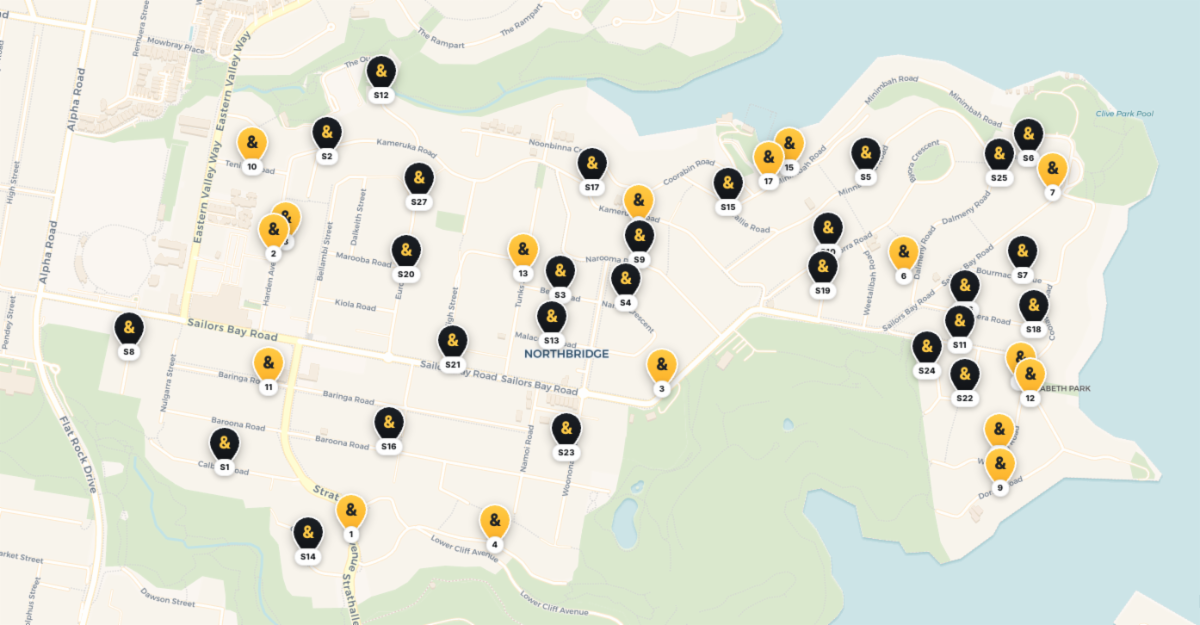 → Click to Explore the Interactive Map |
| |
|
David Howe
Partner Agent · Raine & Horne Lower North Shore
|
Taka Shino
Team Howe · Raine & Horne Lower North Shore
|
|
|
Lower North Shore
140 Sailors Bay Road, Northbridge NSW 2063
Real Insight Weekly
© Raine & Horne Lower North Shore. You are receiving this because you have previously been in touch with our office about Lower North Shore property.
|
| |